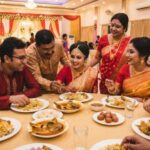
Kolkata is often called the City of Joy, but it could easily be renamed the City of Flavors. From the historic bylanes of North Kolkata to the modern high-rises of the south, the city is a vibrant tapestry of communities living side by side. When these diverse cultures come together to celebrate—whether for a wedding, a corporate gala, or a family reunion—the food becomes the central storyteller. This is where cultural catering in Kolkata plays a pivotal role, turning a simple meal into a respectful homage to heritage.
In a city where a Marwari sangeet might precede a Bengali bou bhat, or where a corporate team lunch includes colleagues from every corner of India, the “one menu fits all” approach no longer works. Food is memory, identity, and comfort. Ensuring that the menu reflects the specific cultural backgrounds of the hosts and guests isn’t just about culinary variety; it is an act of inclusivity.
Navigating the nuances of diverse traditions requires more than just a good cook; it demands a deep understanding of rituals, dietary laws, and the emotional connection people have with their traditional cuisine.
Understanding Multicultural Weddings & Events in Kolkata
Kolkata has always been a melting pot. While it is the heart of Bengal, it is also home to thriving Anglo-Indian, Chinese, Marwari, Bihari, Punjabi, and South Indian communities. Consequently, the event landscape has evolved.
Multicultural wedding catering in Kolkata has seen a surge in demand as cross-cultural marriages become more common. A wedding might involve a morning South Indian ceremony followed by an evening Bengali reception. Similarly, corporate events often host international delegates or pan-Indian teams.
In these scenarios, the challenge lies in representation. If the groom is Punjabi and the bride is Bengali, serving only Fish Paturi might alienate half the guest list, while a menu dominated entirely by Butter Chicken might feel inauthentic to the bride’s family. Successful events acknowledge both sides, creating a culinary bridge that invites everyone to the table without erasing individual identities.
Importance of Respecting Cultural & Religious Food Traditions
When planning a menu for a diverse group, taste is subjective, but tradition is often non-negotiable. Traditional catering services in Kolkata must be well-versed in the specific rules that govern different religious and community kitchens.
Dietary Restrictions & Religious Guidelines
Respecting dietary laws is the foundation of cultural catering. This goes beyond identifying vegetarians and non-vegetarians. For many communities, the preparation is as important as the ingredients.
Jain Cuisine
Requires strict adherence to excluding root vegetables like onions, garlic, and potatoes.
Halal
For Muslim guests, ensuring meat is sourced and prepared according to Halal guidelines is essential.
Satvik
Often required during specific Hindu pujas or ceremonies, focusing on pure, vegetarian ingredients without onion or garlic.
Crucially, a professional caterer knows that cross-contamination is a dealbreaker. Using separate utensils, oils, and cooking stations for vegetarian and non-vegetarian dishes—or for specific religious cuisines—is a mandatory practice to maintain the sanctity of the meal.
Cultural Significance of Specific Dishes
Food often serves a ritualistic purpose. In a Bengali wedding, the Dadhimangal involves specific items served at dawn. In a Christian wedding, the cutting of the cake or the serving of wine holds symbolic value. These aren’t just meals; they are blessings. A caterer who understands cultural catering in Kolkata knows that missing a specific ritual dish can upset the elders and dampen the spirit of the occasion.
Custom Menu Planning for Multicultural Weddings
The magic of a multicultural wedding lies in the menu planning. It requires a delicate balancing act to ensure no guest feels left out and every tradition gets its moment in the spotlight.
Balancing Traditional & Modern Tastes
The modern palate is adventurous, but it still craves comfort. A successful menu often combines authentic, heirloom recipes with contemporary presentations. For instance, a traditional Kosha Mangsho (mutton curry) must taste exactly like it does in a Bengali home, but it might be served alongside a modern salad bar or a live pasta station to cater to younger guests.
However, fusion should be handled with care. While a “Butter Chicken Pizza” might work for a cocktail party, the main wedding feast usually requires distinct, authentic flavors. The goal is to offer variety without confusing the palate or disrespecting the origins of the dish.
Multi-Cuisine Menu Structuring
Organization is key. To prevent a clash of flavors, expert caterers often utilize a “food island” or counter strategy.
Regional Counters
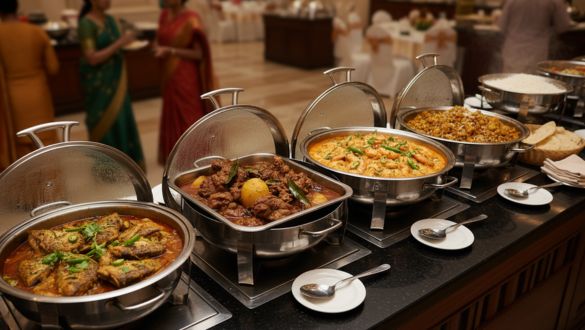
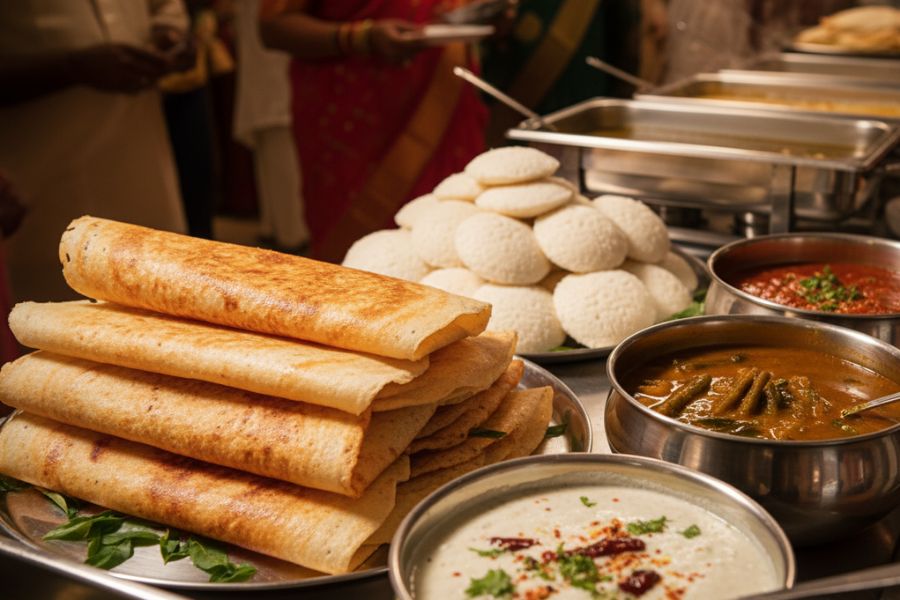
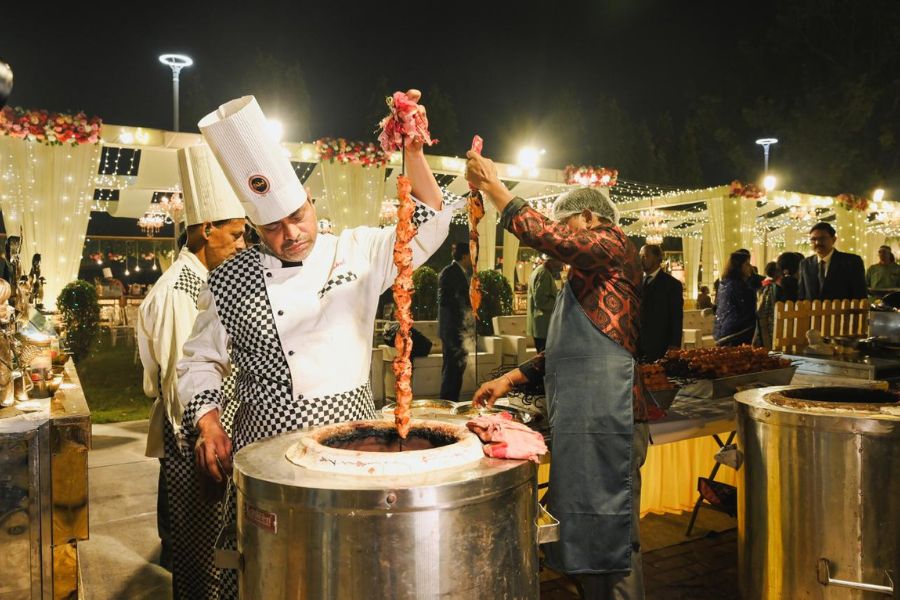
Dedicating specific sections to specific cuisines prevents flavor fatigue. A distinct counter for authentic South Indian dosas and another for spicy North Indian kebabs allows guests to choose their culinary journey.
Live Stations
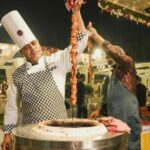
These are excellent for showcasing regional specialties. A live Phuchka stall for the Kolkata vibe or a live Jalebi station for a North Indian touch adds theater and freshness to the event.
Popular Cultural Catering Styles in Kolkata
Kolkata’s culinary repertoire is vast. Understanding the pillars of these cuisines is essential for anyone looking to host a successful event.
Traditional Bengali Wedding Menus
Bengali wedding catering is an art form. It is a multi-course affair that follows a specific progression of tastes, usually starting with something bitter (Shukto) and ending with something sweet. Key staples include:
- Fish: From Shorshe Ilish (Hilsa in mustard) to Chingri Malai Curry (Prawns in coconut milk).
- Rice: Fragrant Basanti Pulao or steamed rice.
- Sweets: No meal is complete without Mishti Doi and Rosogolla.
North & South Indian Wedding Catering
For North Indian setups, the focus shifts to rich gravies, tandoor items, and breads like Naan and Kulcha. Dishes like Dal Makhani and Paneer Tikka are crowd favorites.
Conversely, South Indian catering emphasizes rice-based dishes, coconut flavors, and tamarind tang. Whether it’s a Sadya served on a banana leaf or a buffet of Idiyappam and Stew, the freshness of ingredients is paramount.
Muslim & Christian Wedding Catering
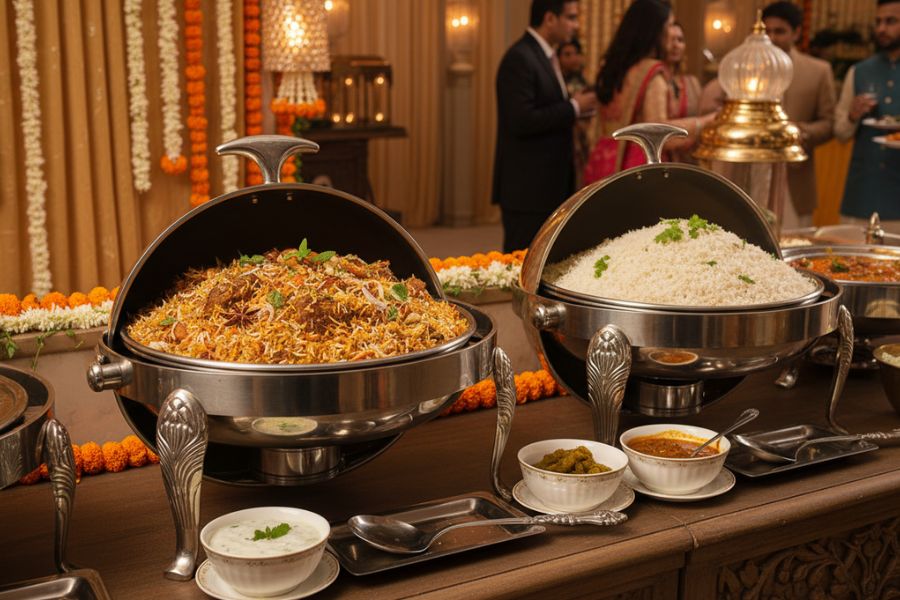
Muslim wedding feasts in Kolkata are legendary for their aromatics. Biryani is the undisputed king here, often accompanied by Chicken Chaap or Rezala.
Christian weddings often lean towards Anglo-Indian or Continental influences. Menus might feature roast meats, stews, vegetable au gratins, and specific desserts like fruit cake or bread pudding.
Presentation, Décor & Cultural Aesthetics in Catering
In cultural catering in Kolkata, the visual appeal must match the culinary authenticity. The way food is presented sets the tone for the event.
Theme-Based Counters
If you are serving Rajasthani food, the counter décor should reflect that—perhaps using puppets or vibrant textiles.
Serving Vessels
Serving Bengali chutneys in terracotta bowls or South Indian Rasam in brass cups elevates the experience.
Signage
Clear, culturally appropriate signage helps guests navigate the spread. Using traditional motifs on menu cards adds a layer of sophistication.
Managing Guests with Mixed Food Preferences
Logistics can make or break a multicultural event. When you have guests with strictly divergent dietary needs, clarity is kindness.
Veg vs. Non-Veg Planning
It is often wise to physically separate vegetarian and non-vegetarian buffet lines to put strict vegetarians at ease.
Kid and Elderly-Friendly Options
A spicy curry might be perfect for the adults, but children and the elderly often need milder options. Including a section with simple, comforting foods ensures everyone leaves satisfied.
Allergy Awareness
In modern catering, labeling dishes that contain common allergens like nuts, dairy, or gluten is a sign of professionalism and care.
Why Choosing the Right Cultural Caterer Matters
You cannot rely on a generic caterer to handle the complexities of a multicultural wedding. You need professional caterers in Kolkata who view themselves as cultural custodians.
Experience is the greatest teacher. A caterer who has handled hundreds of mixed-culture weddings will anticipate problems you haven’t even thought of. They know that the fish must be fresh from the market that morning, and they know exactly which spices differentiate a Madras curry from a Bengali curry. Furthermore, their staff will be trained to serve guests with the etiquette specific to that culture, ensuring the hospitality feels as authentic as the food.
How Babul Caterer Specializes in Cultural Catering in Kolkata
At Babul Caterer, we understand that your event is a celebration of your identity. As a leader in cultural catering in Kolkata, we have spent years perfecting the art of the multicultural menu.
We don’t just cook; we curate. Whether you need a fully traditional spread or a fusion menu that honors two different families, our team works closely with you to design a culinary experience that respects every ritual. We pride ourselves on:
- Authenticity: Our chefs specialize in regional cuisines, ensuring the flavor profile is genuine.
- Customization: We tailor every menu to specific religious and dietary requirements.
- Service: Our team is trained to manage diverse crowds with grace and efficiency.
From the first appetizer to the final dessert, we ensure your traditions are honored on every plate.
Celebrating Unity Through Food
In a world that often highlights differences, food remains a powerful unifier. A wedding or event where a guest can enjoy a perfect Luchi alongside a perfect Kabab is a beautiful symbol of harmony.
Planning a multicultural event can be stressful, but the food shouldn’t be. By choosing the right partners and respecting the diverse traditions of your guest list, you transform a simple meal into a memorable celebration of unity. When done right, cultural catering in Kolkata proves that while our traditions may differ, our love for good food and community is the same.